
Montgomery County, Texas: The Big-Picture Guide to the Place We Call Home
Lake days. Tall pines. Friday night lights. Kolaches on the way to practice and a new neighbor moving in on what feels like every street.
That's Montgomery County, Texas, and if you live here, you already know it's more than a dot between Houston and Huntsville. It's a place with a story older than the State of Texas itself, a lake that changed everything, and a whole lot of towns that each do things their own way.
Here's the big-picture guide to the place we call home.
Older Than the State of Texas
Montgomery County was created on December 14, 1837, by the Congress of the Republic of Texas, with President Sam Houston signing it into law. Texas wouldn't join the United States for another eight years.
The county took its name from the town of Montgomery, which had been founded just months earlier and served as the first county seat. The seat bounced around a bit after that. Willis won a vote for it in 1874, Montgomery got it back in 1880, and in 1889 it moved to Conroe, where it has stayed ever since.
The County That Gave Texas Its Flag
Here's one to pull out at your next dinner party. Dr. Charles B. Stewart, a Montgomery resident, designed the Lone Star Flag. President Mirabeau Lamar formally accepted it on January 25, 1839, and it became the state flag when Texas joined the Union in 1845. Every time you see that single white star, you're looking at a little piece of Montgomery County history.
Black Gold in the Piney Woods
On December 13, 1931, George Strake struck oil near Conroe, and the county was never the same. The Conroe oil field was once the third largest in the United States. The boom brought money, people and a few wild stories, including a 1933 well that cratered so badly it left a hole estimated at 600 feet deep.
How Many People Live in Montgomery County?
The 2020 Census counted 620,443 residents. By July 2025, the Census Bureau estimated 781,194. That's more than 160,000 new neighbors in about five years, and you can probably feel it on your morning drive.
The Lay of the Land
The county covers about 1,077 square miles, and roughly 35 of those are water. Walker and San Jacinto counties sit to the north, Liberty County to the east, Harris County to the south, and Waller and Grimes counties to the west. We're part of the greater Houston metro, but with a lot more trees.
Our Towns
Part of what makes Montgomery County special is how different each corner feels. A few of the places locals call home:
Conroe, the county seat, born from a lumber mill and an oil boom
The Woodlands, George Mitchell's master-planned forest community
Montgomery, the oldest town in the county and birthplace of the Lone Star Flag
Magnolia, a railroad town named for its magnolia trees
Willis, once the heart of Texas tobacco country
Shenandoah, small in size and big on shopping and dining
Cut and Shoot, with the best town-name story in Texas
Splendora, named for the splendor of its wildflowers
New Caney and Porter, gateways to the Lake Houston wilderness
Montgomery County School Districts
Public schools here are served by six main districts:
Conroe ISD
Magnolia ISD
Montgomery ISD
New Caney ISD
Splendora ISD
Willis ISD
Parts of Richards, Tomball, Humble and Cleveland ISDs also reach into the county. Lone Star College serves most of the area for community college.
4 Things Montgomery County Is Known For
1. Lake Conroe. The dam was finished in January 1973 and the lake was full by Halloween that year. At about 20,000 acres, it's our weekend playground for boating, fishing and waterfront dinners.
2. Sam Houston National Forest. A big piece of the forest sits inside the county, which keeps the Piney Woods and miles of trails close to home.
3. The Woodlands. Opened on October 19, 1974, George Mitchell's forest-first community counted 114,436 people in the 2020 Census.
4. W.G. Jones State Forest. These 1,722 acres between Conroe and The Woodlands are one of the largest working urban forests in the country, home to endangered red-cockaded woodpeckers and Texas's only nationally recognized Children's Forest.
Never Miss a Weekend in Montgomery County
The MontCo Insider newsletter lands every Thursday, just in time to plan your weekend. Inside you'll find things to do, new shops and makers, local food finds and businesses worth knowing, from Magnolia to Splendora and everywhere in between. It's free, and it's written by a neighbor.
👉 Get the free Thursday newsletter
Wear Your Montco Pride
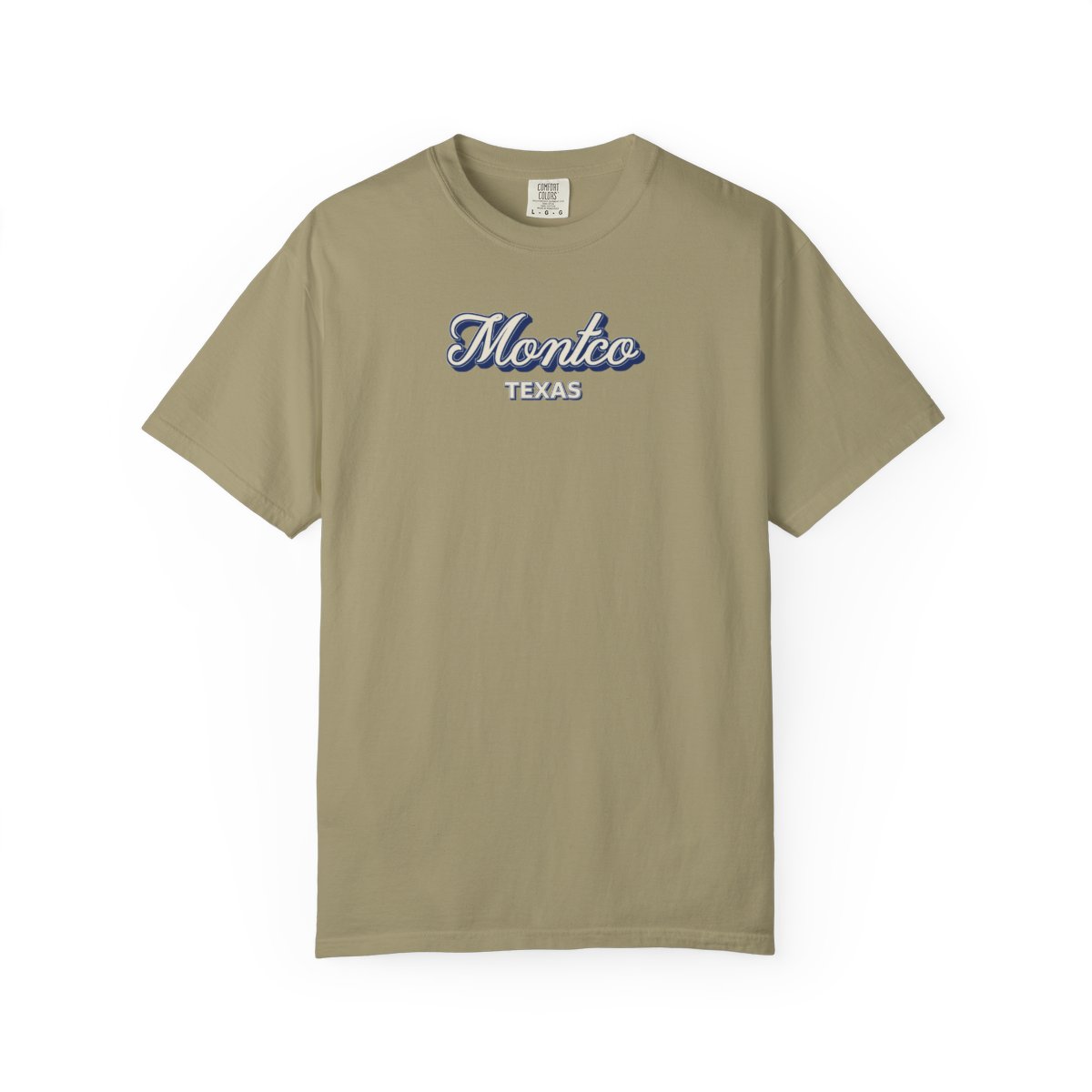
Whether you're in Conroe, Magnolia or down a back road in between, the Montco tee is for everyone who calls this county home. "Montco" is set in a bold vintage athletic script with TEXAS tucked underneath like an old-school ballpark jersey, printed on a soft, garment-dyed Comfort Colors tee. It's a great gift for locals, newcomers, and anyone who misses home.
Montgomery County, TX FAQ
What is the county seat of Montgomery County, TX?
Conroe, since 1889.
When was Montgomery County established?
December 14, 1837, during the Republic of Texas.
What is the population of Montgomery County, TX?
620,443 at the 2020 Census, with an estimated 781,194 as of July 2025.
Where does the name Montgomery County come from?
The county is named for the town of Montgomery, its first county seat.
How big is Lake Conroe?
About 20,000 acres, depending on which survey you use. It filled in 1973.